
April Started Like a Breakthrough. Then Week Four Happened.
Month of April 2026 | The good, the bad, and everything in between.

I want to start with the truth.
April ended red. -$21.65 net for the full month. That is the number TradeVipe shows, and that is the number I own.
But here is what makes April the most complicated month I have documented so far. For three and a half weeks, this was the best trading I had ever done. Framework execution. Confirmed entries. Partial trims. Runners held overnight. The process produces exactly what it is supposed to produce.
Then Week Four happened. And four days undid almost everything.
That is the story of April. Not just the losses. The whole thing.
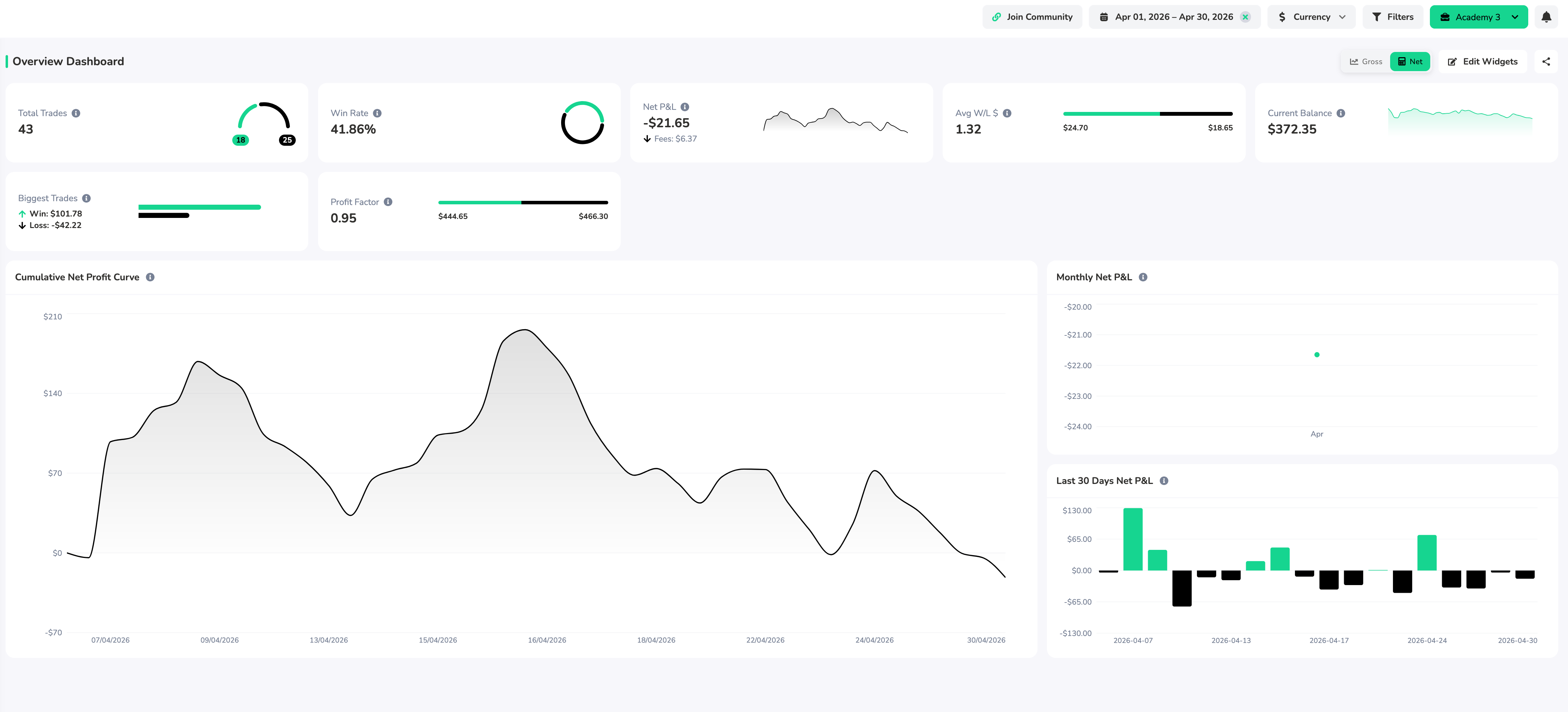
[Screenshot: TradeVipe April 2026 Overview Dashboard — 43 trades, 41.86% win rate, -$21.65 net]
The Month in Numbers
April 1–30 final verified stats:
Total trades: 43
Wins: 18 | Losses: 25
Win rate: 41.86%
Net P&L: -$21.65
Avg win: $24.70 | Avg loss: $18.65
Profit factor: 0.95
Best single trade: QQQ 4/7 577p +$101.78
Worst single trade: QQQ 4/9 595P -$40.46
Current streak at month end: -6
The average win being larger than the average loss, that ratio is correct. That tells me the edge is real when I execute it. The problem this month was the win rate. At 41.86%, the math barely holds. At 50%, it works clearly. The difference between those two numbers is discipline.
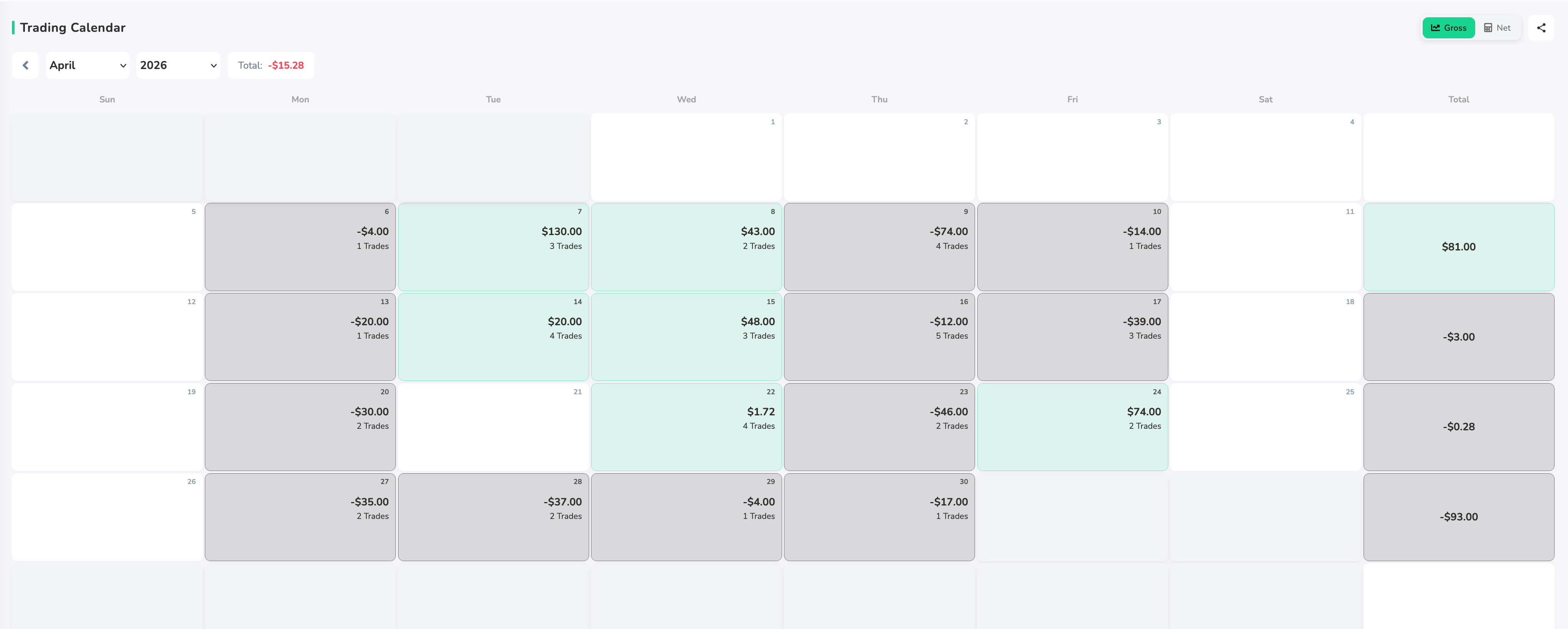
[Screenshot: TradeVipe April 2026 Trading Calendar -$15.28 gross]
Week One — The Framework Fires
[Screenshot: April Week 1 calendar — +$81.00 gross]

Week One was proof of concept.
Tuesday, April 7. Three trades. Three wins. +$130 in one session.
QQQ 577p entered at $0.39 with two contracts. Confirmed close through the level. Multi-timeframe alignment. Stop and target set before the entry button was pressed. Exit at $0.90. +131% in ten minutes.
Then SPY 650p., later the same morning. Three-step confirmation. Patient entry. Target hit at 11:54 AM. +133%.
That Tuesday session is the clearest example I have of what this framework looks like when everything is working. Not luck. Not a random spike. A thesis mapped the night before, a confirmed entry, a pre-set target, and the discipline to let it play out.
The rest of Week One was messier. Thursday, April 9, cost -$74, three entries on the same QQQ 595P puts position, escalating size each time, averaging down on a losing setup. That pattern would reappear later in the month in a worse way. Friday closed with a -$14 loss on AAPL that was actually a clean trade in the right direction, stop honored, loss contained.
Week One net: +$79.22
The swing was wide. The lessons were real. The week closed green.
Week Two — The Runner
[Screenshot: April Week 2 calendar -$3.00 gross]

The headline trade of the entire month happened in Week Two.
Wednesday, April 15. QQQ 640c entered at $0.36. Confirmed ORB break. Multi-timeframe alignment. Stop set. Target set. First contract trimmed at +56%. Second contract held overnight as a runner.
Thursday, April 16, at 6:31 AM — runner closed at $0.96.
+167%. +$59.88 on one contract held 38 hours.
That runner was the product of one decision made the night before to define the exit before you go to sleep. Nearest resistance identified. Target set below it. When the market opened on Thursday and hit the level, the plan executed itself.
The rest of Week Two was inconsistent. SPY 704C entered after 8:30 AM on a 0DTE -$16. QQQ 650c chased at 9:40 AM outside the window, -$42. The same pattern from Thursday, April 9 showing up again on Thursday, April 16. Something about Thursdays this month.
Week Two net: -$5.14
The runner almost saved the week. Almost.
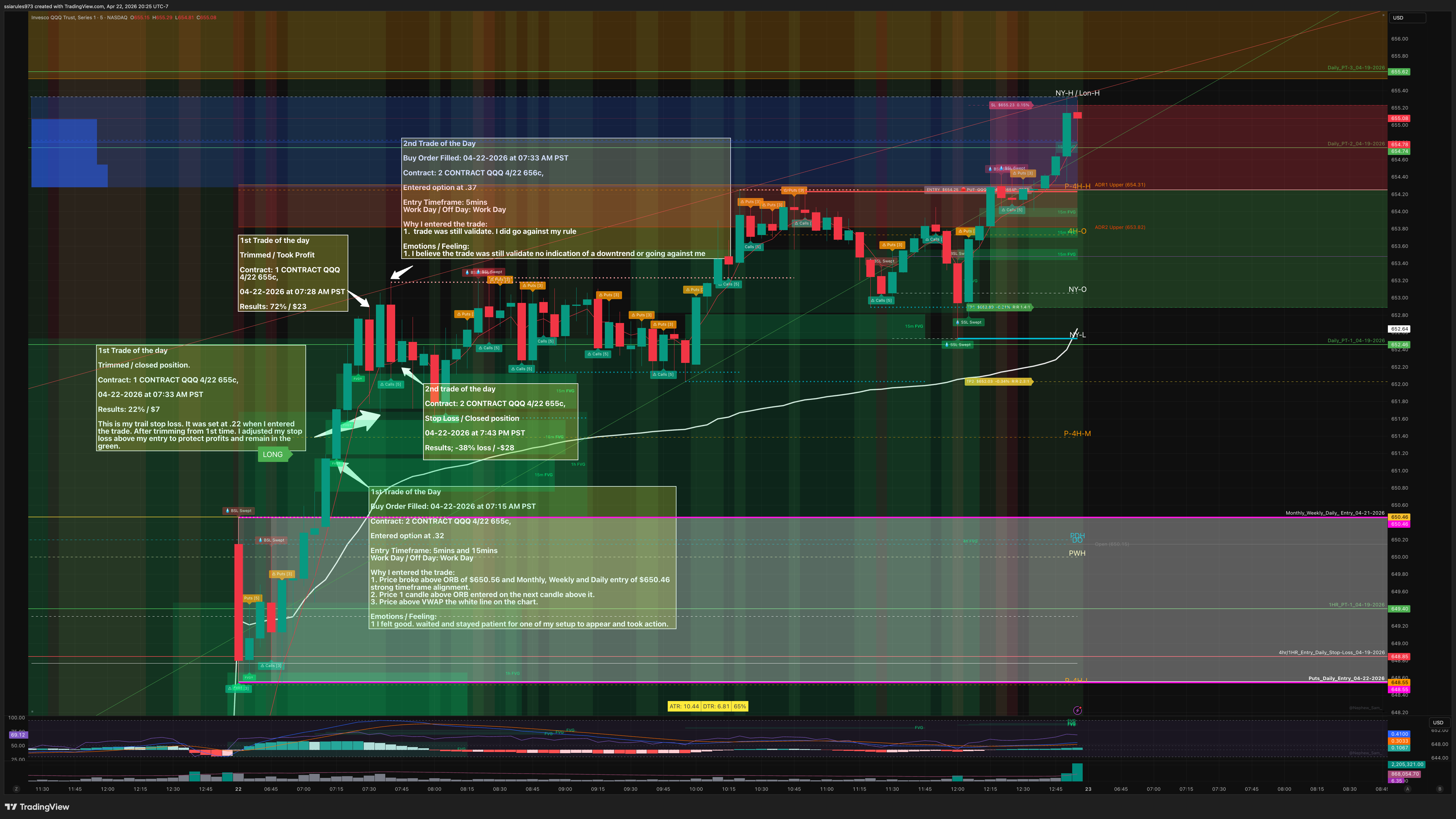
[Screenshot: QQQ 4/22 655c + 656c — Wednesday execution showing trim and stop]
Week Three — Wednesday Was the Template
[Screenshot: April Week 3 calendar — +$0.00 gross]

Week Three had the cleanest single-day execution of the month.
Wednesday, April 22. QQQ 655c. Two contracts at $0.32. Price broke above ORB $650.56 with Monthly, Weekly, and Daily confluence all confirming. First candle above ORB entered on the next candle. Above VWAP. Calm emotional state going in.
First contract trimmed at $0.55. +72%. Trail stop adjusted to protect profit on the second contract. Trail triggered at $0.39. +22%.
That is the mechanic working exactly as designed. Enter with two contracts. Take the first profit at TP1. Move the stop to protect the floor. Let the second contract run to wherever it goes. Walk away with something either way.
Then I immediately entered QQQ 656c five minutes later. No new FVG. No new confirmation. The first trade won, and I wanted more. -$28. The 30-minute cooldown rule exists for exactly that moment.
[Screenshot: QQQ 4/23 658c + 665c — Thursday showing two losses and DTR 109%]
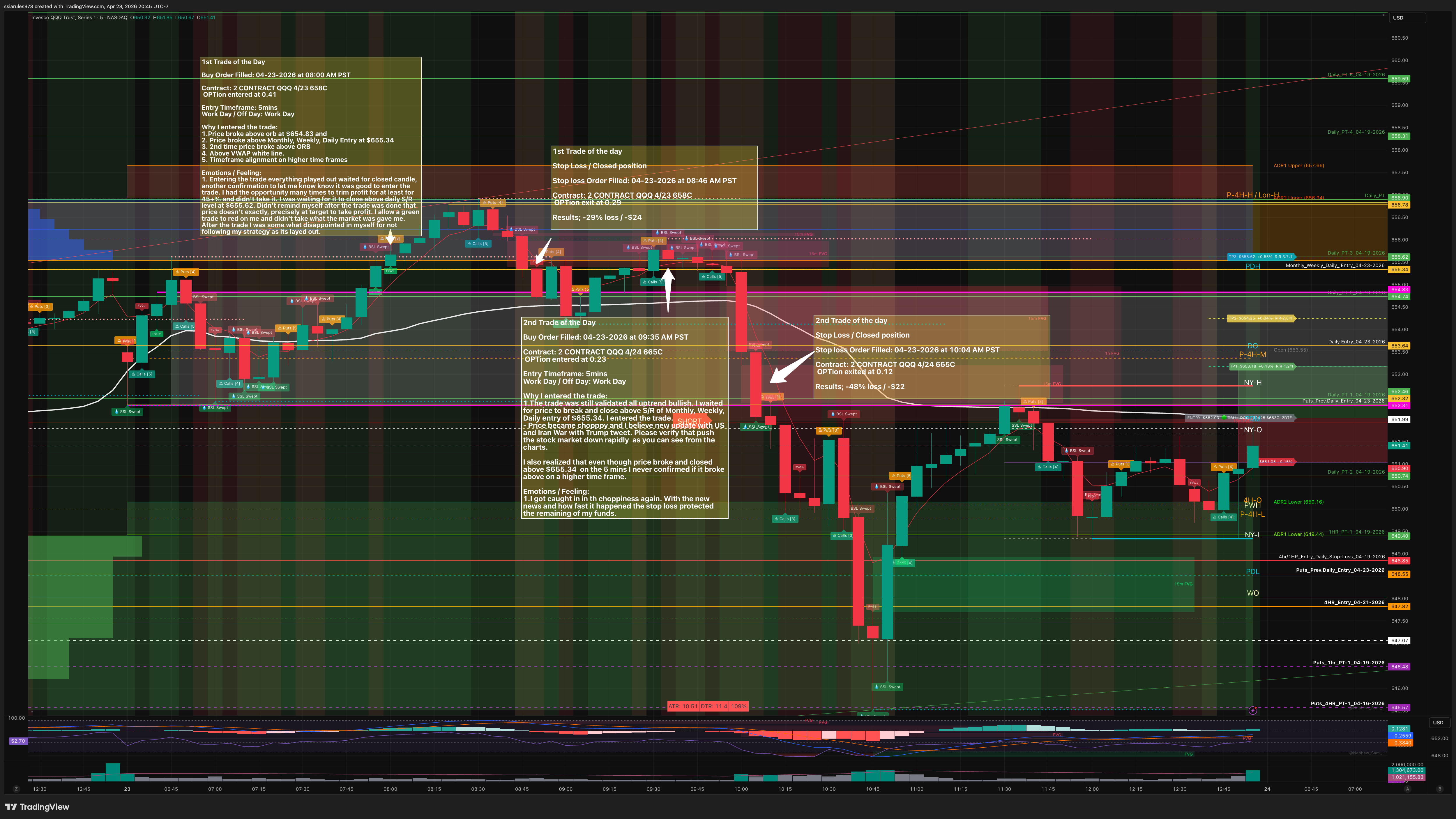
Thursday, April 23, was the opposite of Wednesday. QQQ 658c entered at 8:00 AM with valid confirmation ORB break, multi-TF alignment, above VWAP. The setup was legitimate. During the hold, the position showed +45% profit. I held for the S/R target at $655.62. Price didn’t get there. Reversed. Stopped out at -29%.
That missed trim is the single most expensive decision of the week. The rule says partial at PT1. The position showed the profit. I held for more. I walked away with nothing.
Then Friday, April 24.
[Screenshot: QQQ 4/24 663c — Friday template trade, trim at +71%, runner +124%]
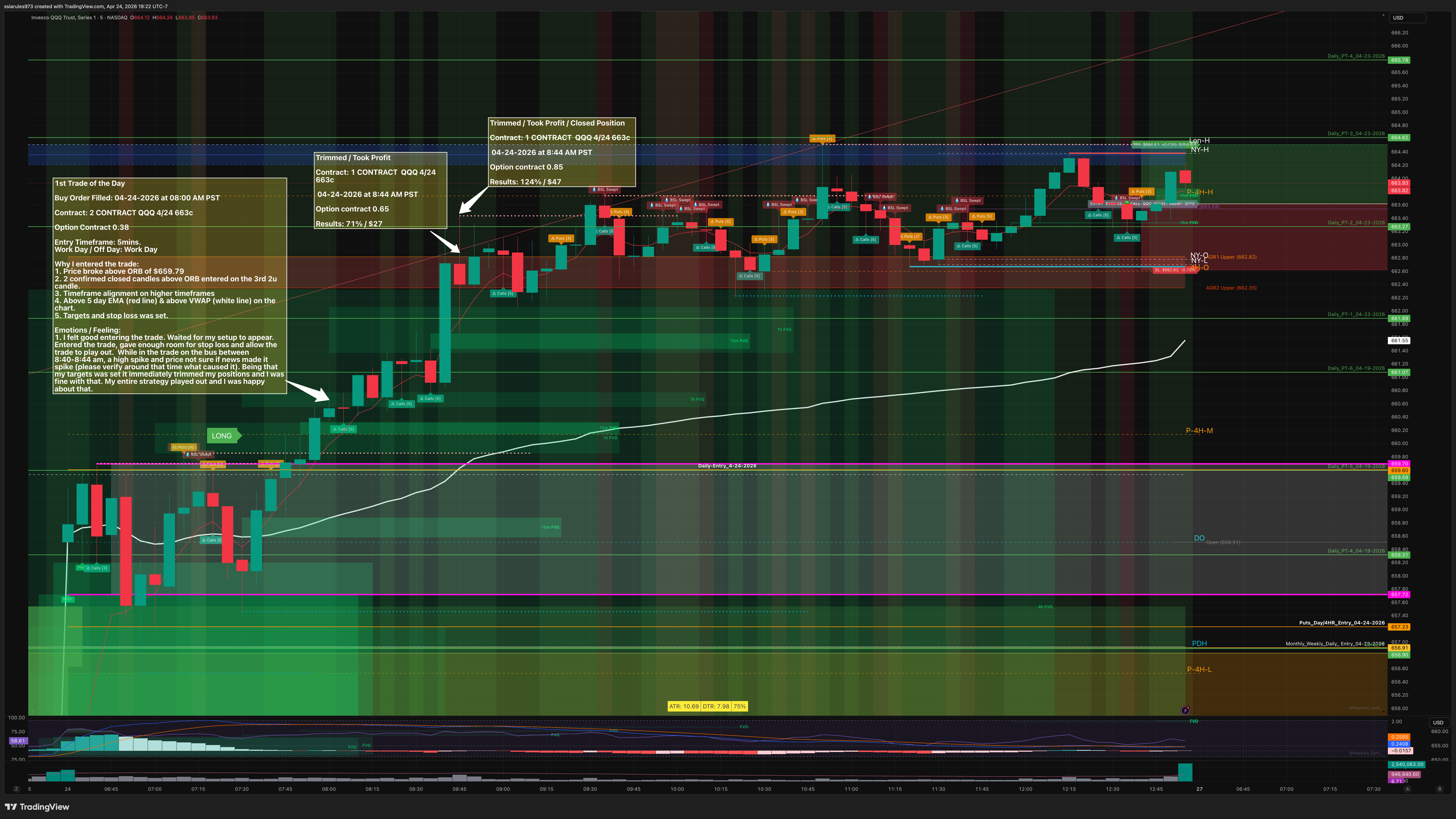
Two contracts at $0.38. ORB break above $659.79 confirmed. Two closed candles above ORB on the third 2-up candle. Timeframe alignment on all higher TFs. Above 5-day EMA and VWAP. Targets and stop set before entry.
I was on a bus when the spike happened.
Because the targets were already set, I trimmed immediately without second-guessing anything. First contract out at $0.65. +71%. Runner held to $0.85. +124%.
I wrote in my journal that day: “My entire strategy played out and I was happy about that.”
That sentence is the standard. Not the percentage. The feeling that comes from executing the process completely.
Week Three net: -$1.44
Friday saved the week from being worse. The runner and the template trade were the month’s best back-to-back sessions.
Week Four — Where It All Came Apart
[Screenshot: April Week 4 calendar — -$93.00 gross]

I have to be direct about what happened in Week Four.
Six trades. Zero wins. -$93.84 net in four days.
That erased everything built in the first three weeks and made April a losing month.
But the number is not the whole story. The why is.
Monday April 27. SPY 720c. ORB break confirmed. 1-hour bullish structure. Multi-TF aligned. DTR at 32%. Stops and targets pre-set. The process was followed correctly.
Price never reached either target. Stop executed cleanly. -$35.36. That is a B+ grade trade that lost. It happens. Market chop the day before major events. The framework was followed. The outcome was variance.
Tuesday April 28. QQQ 650p. Entered puts against a confirmed Stage 2 bullish daily uptrend. I recognized it while I was in the trade — “only a pullback.” The recognition came after entry. Not before. -$37.24.
Wednesday April 29 was FOMC day. I sized down to one contract, exited quickly, contained the damage to -$4. The risk management was right even if the direction was still against the daily trend.
Thursday April 30. The clearest violation of the week. Entered QQQ 652p looking for breakdown below $658.55. The candle never closed below that level. Price wicked below and bounced. I entered on the wick.
My pre-trade quiz asks one question before every entry: Is this the approach or the confirmation?
I answered it after the trade was open. By then it was already a loss. -$17.12. Trading under financial pressure is a different mental state. Wanting more from each trade. Not trimming small wins because they feel too small. Fading strong trends hoping for reversals. All of those behaviors showed up in Week Four. All of them are symptoms of trading to recover money rather than trading the process.
Week Four net: -$93.84
What the Dashboard Is Telling Me
[Screenshot: TradeVipe April Detailed Performance — entry time range and weekday P&L]
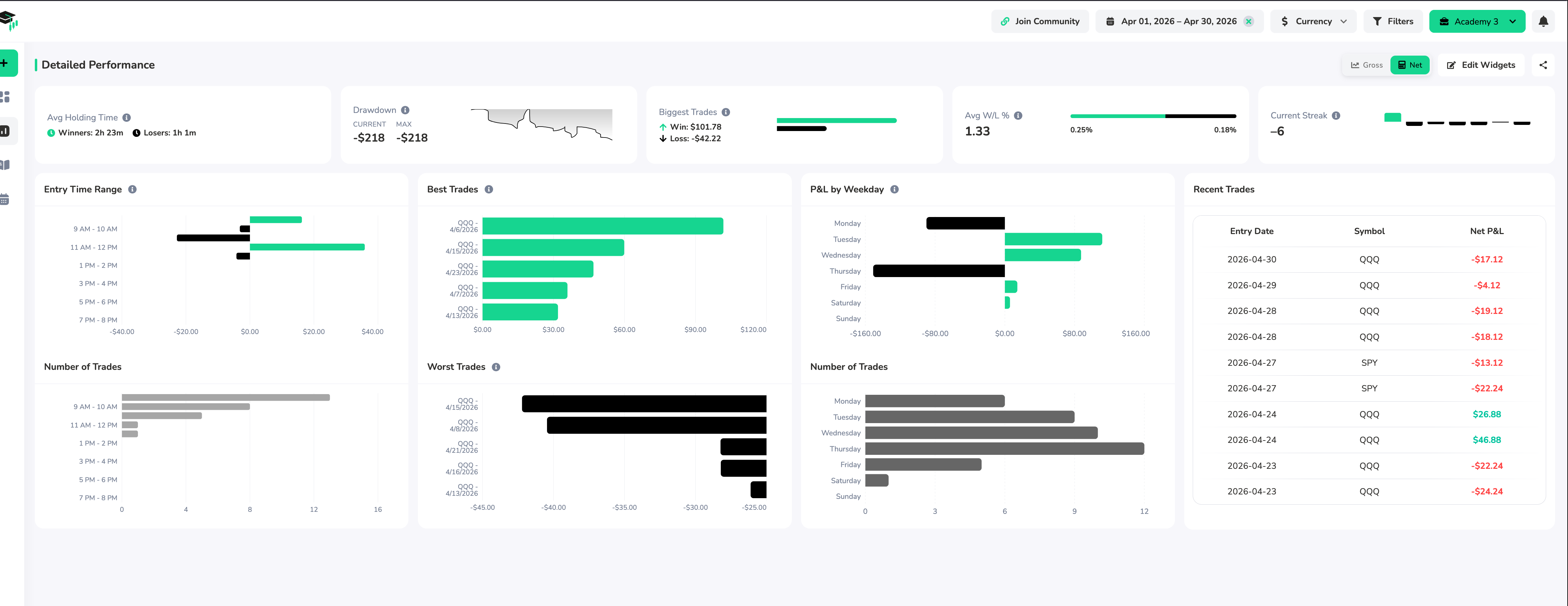
The entry time data confirms what the rules already say. The 9–10 AM window is my best performing time slot. The 11 AM–12 PM window is deeply negative. After that it gets worse.
Weekday performance. Monday and Thursday were consistently red all month. Tuesday and Wednesday were consistently green. Friday was nearly flat. That pattern held across all four weeks without exception. Something about my mental state entering Mondays week-start pressure, wanting to start the week green is producing reactive entries. Thursdays follow the same pattern but for a different reason. Two green days building confidence and then the overconfidence shows up.
The worst trades list has QQQ 4/15 at the top. That is the week the runner was held overnight and the P&L split across two days in the platform. QQQ 4/8 and 4/9 follow. Thursday April 9, three entries on the same losing position. That is also where the averaging down pattern first appeared this month.
Current streak of negative six heading into May. That is the number that needs the most attention going forward.
The Two Halves of April
If April had ended on April 24 it would have been my first green month since I started tracking.
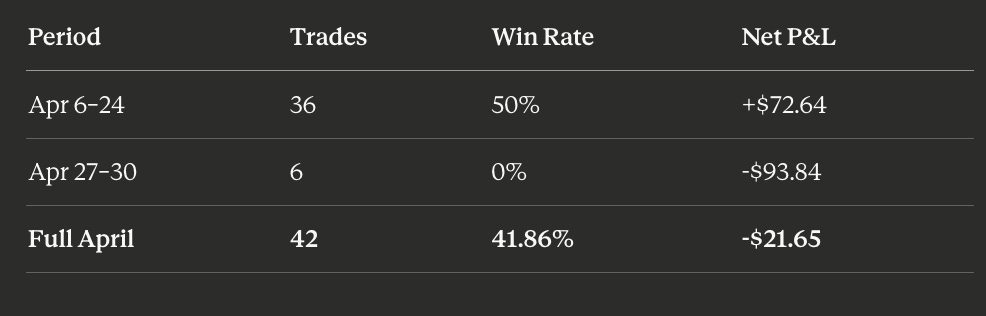
The first period shows the framework working. The second shows what happens when financial pressure enters the equation and the process gets abandoned.
Both periods happened to the same trader using the same strategy. The only thing that changed was the mental state behind the execution.
What I Am Carrying Into May
The trim rule is non-negotiable.
April 23 — position showed +45% and I held for the target. Walked away with a loss. That one decision turned a winning trade into -$24. The partial exit at PT1 is not about leaving money on the table. It is about guaranteeing I leave with something. Every time. No exceptions.
The 30-minute cooldown after every trade is sacred.
April 22 — Trade 1 was A+. Trade 2 entered five minutes later. -$28. That sequence has repeated multiple times across the month. Win, immediately re-enter, give it back. Thirty minutes minimum. Phone timer set. No override.
Confirmation means a candle close. Not a wick touch. Not an approach.
April 30 was the clearest example of what happens when I answer the confirmation question after entry instead of before. The wick touched the level. The candle never closed below it. I was already in the trade by the time I noticed. That sequence cost $17. More importantly it broke the first rule in the entire framework.
Puts only in a confirmed 1-hour breakdown.
Four of six Week Four trades were puts into a bullish Stage 2 daily uptrend. QQQ was making higher highs and higher lows all week. The rule is clear — puts only when 1-hour breaks down with confirmed lower high structure. That never happened. I faded the strength hoping for reversals. All four stopped out.
Financial pressure and trading do not mix.
This is the lesson that does not fit neatly into a rubric. When money owed back to the account exists while trading is happening, the psychology shifts in ways that break every other rule. The only solution is to separate the two. Let income cover the debt. Trade from a clean mental position.
What April Proved
April was not a failed month. April was the most clarifying month of this entire journey.
It showed both things at once. The framework produces real results when executed completely. And financial pressure combined with emotional reactions destroys execution faster than any market condition ever could.
Those two truths together are worth more than a green month.
The avg win this month was $24.70 against an avg loss of $18.65. When I win I win bigger than I lose. The edge exists. The math works at 50% win rate. Getting back to 50% is not a strategy problem. It is an execution and mental state problem.
That is actually the better problem to have.
[Screenshot: Cumulative net profit curve — April peak at +$175 and Week 4 drawdown]
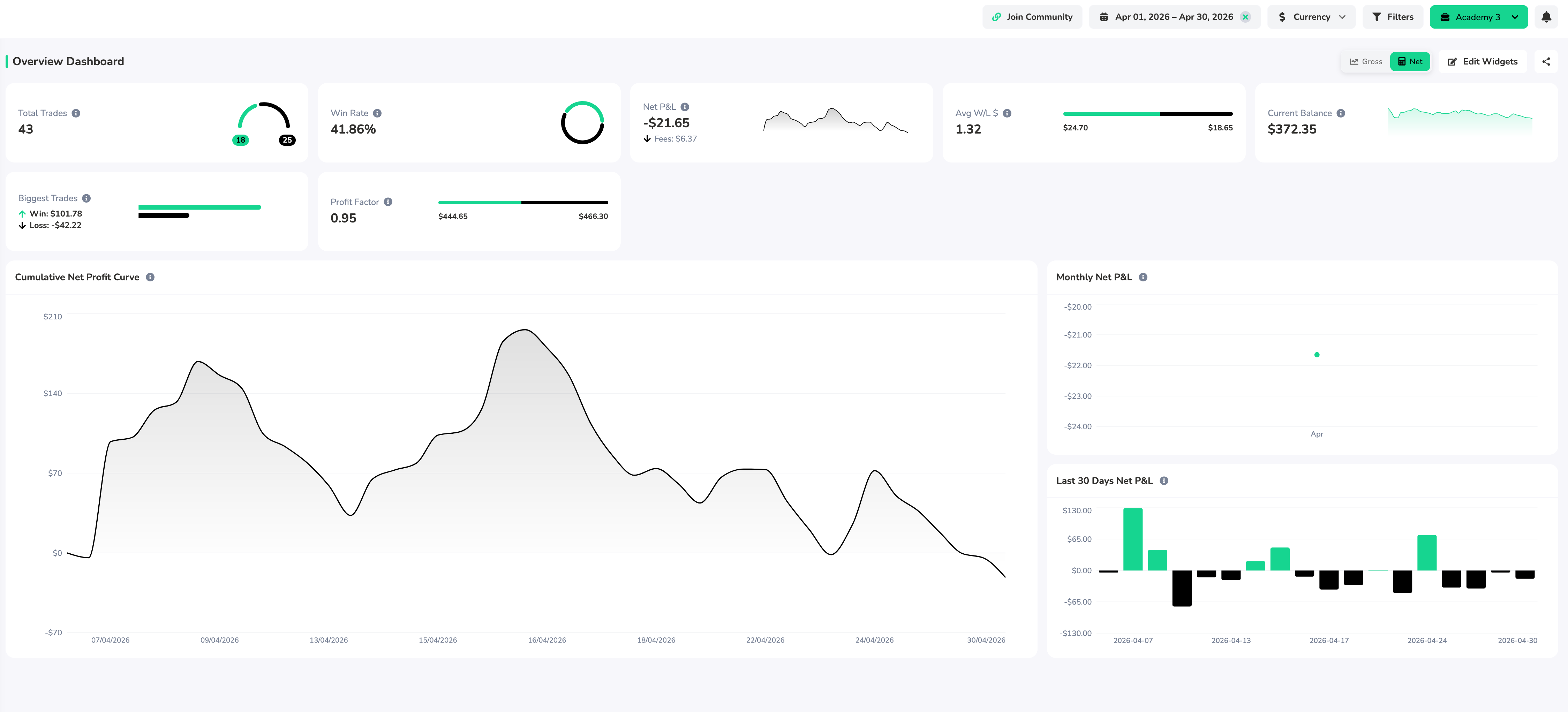
May is about one thing. Not recovering April’s losses. Not chasing a P&L number. Executing the framework that produced +$130 on April 7 and +$73 on April 24.
The process that produced those trades still works. Nothing changed about the strategy.
What needs to change is the mental state behind the execution. Every single time.
Personal trading journal documenting real trades, real losses, and real lessons in options trading. Not financial advice. Options trading carries substantial risk of loss and you can lose your entire investment.